
Nicotine Pouch “Zing” on Your Gums

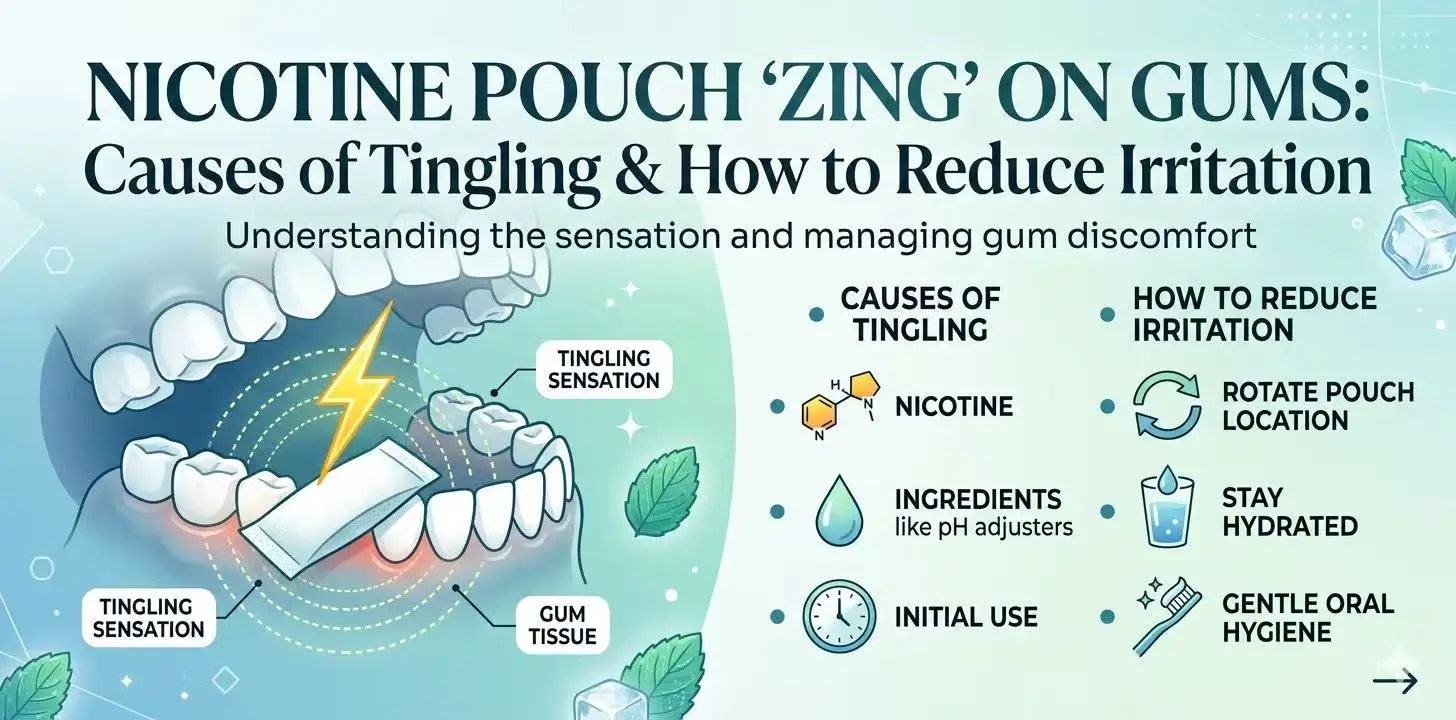
Causes of Tingling/Spicy Sensation & Evidence-Based Ways to Reduce Irritation
The Tingling Surprise
After switching to tobacco-free nicotine pouches, many users notice a tingly or spicy “zing” feeling on the gums or inner lip. It can feel alarming—especially if you’ve seen claims about gum damage online.
This article helps you understand what that sensation may mean and how to reduce irritation, improve comfort, and protect your oral health habits.
What That “Zing” Typically Means (And Why It Happens)
A gum “zing” is usually linked to local oral factors, not instant “damage certainty.” Common contributors include:
1) Local nicotine contact on sensitive tissue
Nicotine is active and can create temporary sensory effects in the mouth, especially when the pouch sits directly on more sensitive gum areas.
2) Irritation from the pouch environment
The pouch can create a local environment that affects oral comfort (for example, through moisture, diffusion, and formulation characteristics). This can produce burning, tingling, or spicy sensations—particularly in the first sessions.
3) Placement pressure and repeated contact points
If the pouch is placed repeatedly in the same spot, you may increase localized irritation from pressure + repeated exposure.
4) Dryness, sensitivity, or existing gum inflammation
If you already have gum sensitivity, irritation, or minor inflammation, you may notice stronger sensations.
Why “More Sting” Doesn’t Always Mean “Worse Injury”
Users often assume:
“If it burns/tingles more, it must be causing severe damage.”
But sensation intensity can be influenced by tolerance, placement, contact time, and oral conditions. The most useful approach is to manage exposure and monitor trends:
Does it fade quickly?
Does it worsen session after session?
Do you see persistent redness/ulcers or ongoing bleeding?
Comfort + symptom pattern matter more than one momentary feeling.
Tobacco-Free vs Smoking: The Relevance to Gum Irritation
Even though you’re feeling the sensation from a pouch, choosing tobacco-free can still be a meaningful harm-reduction step because combustible smoking introduces smoke particulates and combustion products that are strongly associated with oral and periodontal harm.
So while a pouch may cause a local “zing,” it doesn’t involve combustion—one major source of added toxic burden in smoking.
How to Reduce Nicotine Pouch Gum Irritation (Practical Protocol)
Use the following steps to minimize burning/tingling and keep sessions comfortable.
Step 1: Rotate placement every time
Don’t place the pouch in the exact same spot repeatedly.
Alternate left/right
Move slightly up/down or toward a different gum area
Goal: reduce repeated localized stress.
Step 2: Shorten contact time within recommended use
If the sensation is intense, avoid extending beyond the recommended time window.
Remove once the effect fades or discomfort increases
Don’t “chase” extra strength by keeping it longer
Step 3: Start lower and build tolerance gradually (if available)
If your product has different strengths, consider starting with a lower strength to see how your mouth responds.
Step 4: Optimize basic oral care
Brush twice daily with fluoride toothpaste
Floss regularly
If dryness occurs, consider a suitable alcohol-free mouthwash
Step 5: Don’t ignore persistent symptoms
If you notice:
sores or ulcers that don’t improve
white/red patches lasting more than ~2 weeks
worsening recession or frequent bleeding
ongoing pain that escalates
…it’s time to consult a dentist or dental professional.
FAQ: Gum Tingling After Nicotine Pouches
Q1: Is a tingling/spicy “zing” normal after my first pouch?
Often, yes—especially early on—because your mouth is reacting to local nicotine contact and pouch-related factors. If it steadily worsens, adjust placement/time and consider lower strength.
Q2: What’s the fastest way to reduce burning feelings?
Rotate placement, shorten contact time, and keep sessions within recommended duration. Also ensure you’re maintaining good oral hygiene.
Q3: If the sensation is mild, can I assume it’s safe?
Mild sensation can be a comfort sign, but it isn’t a guarantee. Watch for persistent redness, ulcers, or changes that don’t resolve.
Q4: Can pouch irritation lead to gum recession?
Any repeated irritation or pressure can contribute to problems in susceptible tissue. This is why rotating placement, controlling contact time, and monitoring symptoms matter.
Q5: When should I stop and see a dentist?
Stop using the product and get professional advice if you have persistent ulcers, patch-like lesions, significant or progressive recession, or symptoms that don’t improve.
Conclusion: Manage the “Zing,” Protect Your Gums
A nicotine pouch “zing” on your gums can be unsettling, but the best strategy is to treat it as a signal to optimize use:
- rotate placement
- follow recommended contact time
- use consistent oral care
- monitor for red flags